Sustainable Development
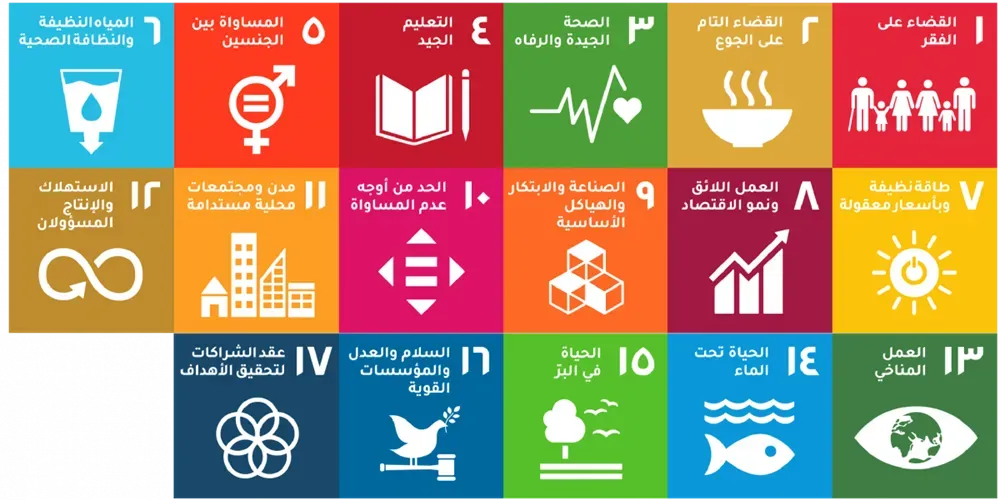
The Sustainable Development Goals were established in 2015 by the United Nations General Assembly and are set to be achieved by 2030. They are a set of 17 interconnected global goals designed to be a "blueprint for a better and more sustainable future for all.
The United Nations General Assembly established the Sustainable Development Goals (SDGs) in 2015, set to be achieved by 2030. They comprise 17 interconnected global goals designed as a "blueprint to achieve a better and more sustainable future for all."
The Social Development Bank (SDB) actively works toward several SDGs focused on financial inclusion, equal opportunity, supporting innovation, industry, and infrastructure, creating economic opportunities, fostering individual economic growth, and enhancing social welfare by supporting low-income groups and persons with disabilities. Additionally, SDB empowers women, reduces inequality, ensures sustainable and accessible services across cities and provinces, and builds strategic public-private partnerships to accelerate the bank’s developmental objectives.
Social Development Bank's contributions to achieving sustainable development
The Bank contributed to achieving 9 out of 17 Sustainable Development Goals.
General Principles of the Sustainable Development Strategy
Community empowerment.
Supporting low-income and vulnerable citizens.
Promoting an entrepreneurial culture and supporting entrepreneurs.
Increasing the non-profit sector’s contribution to GDP.
Boosting household savings rates.
Core Pillars for Achieving Sustainable Development at SDB
Community Empowerment:
Empowering social welfare beneficiaries, entrepreneurs, and women by developing income-generating economic projects.
Providing interest-free social financings to low-income and vulnerable citizens for marriage, home renovation, and family living expenses.
Supporting special-needs groups and families most in need through dedicated financing programs for families of prisoners, orphans, widows, abandoned women, and insolvent individuals.
Enhancing the Non-Profit Sector’s Contribution to GDP:
Offering specialized financing programs for entrepreneurs to support industries aligned with the capabilities of Saudi youth.
Fostering financial management and savings habits across all segments of society.
Developing savings products tailored to all societal segments in partnership with the private sector.
Delivering non-financial support through integrated training, capacity building, advisory, and awareness programs.
Primary Objectives of SDB’s Sustainable Development Strategy
1. Empowering Entrepreneurs and Creating Job Opportunities:
Masarat Program (via the following tracks):
Emerging Projects Track: Targets small projects to generate job opportunities for all community groups, particularly entrepreneurs.
Excellence Track: Targets high-priority economic sectors requiring funding exceeding SAR 300,000.
Existing Projects Track: Finances profitable small and medium enterprises (SMEs) eligible for growth to support expansion and wider market reach.
2. Increasing the Non-Profit Sector’s Contribution to GDP:
"Tamkeen" Program: Activates the role of charities and NGOs in transitioning from direct relief work to broader developmental impact. It establishes internal units to deliver microfinance services (financial and non-financial), enabling beneficiaries to engage in micro-economic activities, reduce dependency on social aid, and build capacity to manage micro-financing portfolios and support productive families.
"Istidama" Program: A financing program for non-profit organizations, associations, and committees in KSA aimed at driving financial sustainability. It provides interest-free financings and non-refundable grants to help entities acquire endowments or investments that generate stable revenue and diversify income streams.
3. Enhancing Women’s Participation in Income-Generating Economic Activities:
Achieved through the Micro-Projects and Productive Families Track.
4. Increasing Household Savings and Promoting a Savings Culture:
Financial Literacy & Savings Awareness Campaign: Spreads a savings culture and raises financial literacy across society, particularly among young people.
Savings Program Implementation Support Project: Designs Sharia-compliant savings products directly linked to social financing for bank clients.
5. Supporting Low-Income and Vulnerable Citizens:
Providing interest-free social financing to low-income citizens for marriage, home renovation, and living expenses.
Introducing specialized financing programs to reach unserved societal segments.
Linking marriage financing to mandatory pre-marital rehabilitation courses to help reduce divorce rates.
Maintaining and correcting social financing issuance and collection data to improve data quality and recovery rates.
Establishing strategic partnerships with government entities and the non-profit sector to ensure funds reach eligible beneficiaries.
6. Advisory, Mentorship, and Training:
Delivered through the Dulani Business Center.
Last Modified Date 20/08/2026 - 5:37 PM Saudi Time